SAUL WHO WAS ALSO CALLED PAUL – PAUL FILLED WITH THE HOLY SPIRIT / ACTS 13:9
SAUL WHO WAS ALSO CALLED PAUL
Saul was a Jewish name, a form of the Hebrew Sha’ul, meaning “asked for.” Paul is a form of the Latin Paulus, meaning “little.” After Paul received a fresh and special filling of the Holy Spirit he became a senior leader of the mission to the Gentiles (those of all nations who are not Israelite or Jewish). This ministry among the Gentiles may be the reason he chose to be known by his Roman name, Paul. Some commentators suggest that because Paul did not want to have a following or a church to be based around himself, he wanted to be known as “the little one.” He wanted to honor and exalt Christ and keep him at the center of the church’s attention – which Paul certainly did.
PAUL FILLED WITH THE HOLY SPIRIT
PAUL, FILLED WITH THE HOLY SPIRIT
One may already be baptized in the Spirit, as was Paul (Acts 9:17), yet in times of special need may also receive fresh fillings with the Spirit. Such repeated fillings are necessary,
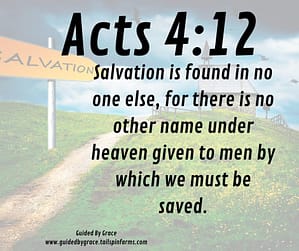
In confronting opposition to Christian ministry (Acts 4:8; Acts 4:12).
In directly challenging Satan’s activity (Acts 13:9; Acts 13:52). Repeated and ongoing fillings with the Spirit should be the normal experience for all Christians who are baptized in the Holy Spirit.
Some links may be affiliated. By purchasing an item from an affiliate link, I receive a small commission – but you are not charged more or less by clicking or purchasing through the link. Thank you for supporting me!
Some of our Post That Might Interest You, All Out of the Current Book / Chapter
As one of the ways by which God commissions people to use spiritual gifts (God-given abilities to honor Him and benefit others) and also conveys His blessings to people, laying on of hands became a foundational teaching in the early church (Hebrews 6:2). It must not be detached from prayer because prayer focuses on God as the source of the gifts, healings or baptism in the Holy Spirit, not the person who is ministering.
The two Greek words that describe the responsibilities of these seven men (“wait on”) is the verb from which the noun “deacon” comes (later we read of deacons in the church, Philippians 1:1; 1 Timothy 3:8-13). The Greek word for deacon can also be translated “minister” or “servant.” Ordaining or commissioning the seven men here meant primarily two things.
It was public testimony or recognition by the church that these seven men has a history f showing godly character and faithfulness to the Spirit’s leading (1 Timothy 3:1-10).
It was an act of setting these men apart, dedicating them to God’s work and confirming their willingness to accept their God-given responsibilities.
Some links may be affiliated. By purchasing an item from an affiliate link, I receive a small commission – but you are not charged more or less by clicking or purchasing through the link. Thank you for supporting me!
Some of our Post That Might Interest You, All Out of the Current Book / Chapter
The form of the Greek verb translated “filled” expresses continued action in past time. The disciples were being continually filled and empowered day by day. That is, they were like containers filled with fresh water, which were continually having more fresh water poured into them so that they overflowed and affected everything around them. The Spirit’s fullness is not merely a one-time initial experience, but rather a life of fresh and renewed fillings that give God’s people the ability to accomplish specific tasks, meet specific refreshment to others (Ephesians 5:18).
Some links may be affiliated. By purchasing an item from an affiliate link, I receive a small commission – but you are not charged more or less by clicking or purchasing through the link. Thank you for supporting me!
Some of our Post That Might Interest You, All Out of the Current Book / Chapter
Three days after Paul’s supernatural encounter with Christ on the road to Damascus, at which time Paul surrendered his life to Christ, he is filled with the Holy Spirit. Paul’s experience parallels that of the disciples at Pentecost. First, he experiences the new spiritual birth and is saved (Acts 9:3-19); then later he is “filled with the Holy Spirit.” Although Luke does not specifically say that Paul spoke in tongues when he received the gift of the Holy Spirit, it is reasonable to assume that he did for these reasons:
The pattern revealed in the New Testament is that a person filled with the Spirit began to speak in tongues (languages they had never learned, but spoke as the Spirit enabled them, Acts 2:4; Acts 10:14-45; Acts 10:46; Acts 11:15; Acts 19:6).
Paul himself says that he frequently spoke in tongues: “I thank God that I speak in tongues more than all of you” (1 Corinthians 14:18).
Some links may be affiliated. By purchasing an item from an affiliate link, I receive a small commission – but you are not charged more or less by clicking or purchasing through the link. Thank you for supporting me!
Some of our Post That Might Interest You, All Out of the Current Book / Chapter
MY SERVANTS, BOTH MEN AND WOMEN – IN THOSE DAYS / ACTS 2:18
MY SERVANTS, BOTH MEN AND WOMEN
According to Joel’s prophecy, quoted here by Peter, the baptism in the Holy Spirit is for those already in God’s kingdom – who are already “born-again” (John 3:3-4; John 3:5; John 3:6) followers of Christ. The promise applies to all male and female, who have devoted themselves to Jesus and who belong to God.
IN THOSE DAYS
Peter, quoting Joel, says that God will pour out His Spirit “in those days” (Acts 2:17) The outpouring of the Holy Spirit (when God generously sends His Spirit to fill, empower and live through His followers) and the supernatural signs and expressions that come with it cannot be limited to just the one “day” of Pentecost. The power and benefits of the Holy Spirit are available for every Christian throughout the church age. That is the entire period of time between Christ’s first coming (or more precisely surrounding His resurrection, return to heaven and sending the Holy Spirit) and His second coming (Revelation 19-20; Acts 2:39). This, of course, included the time in which we now live.
Some links may be affiliated. By purchasing an item from an affiliate link, I receive a small commission – but you are not charged more or less by clicking or purchasing through the link. Thank you for supporting me!
Some of our Post That Might Interest You, All Out of the Current Book / Chapter
HOLY SPIRIT CAME ON THEM AS HE HAD COME ON US AT THE BEGINNING / ACTS 11:15
The outpouring of the Holy Spirit at Pentecost (when God generously sent His Spirit to fill and empower His followers, Acts 2:4) had set a pattern for receiving the Spirit from that point on. The baptism in the Spirit would involve a noticeable transformation in the individual from the inside out, including an expression of increased joy, Spirit-inspired praise in tongues (a language not learned by the speaker) and boldness to speak about Christ (Acts 2:4; Acts 4:31; Acts 8:15-19; Acts 10:45-47; Acts 10:46; Acts 19:6). For this reason, when Peter pointed out to the others in Jerusalem that Cornelius’ household had spoken in tongues when they received the Holy Spirit (Acts 10:45-46), the Jews were convinced that God was granting salvation through Christ to the Gentiles (non-Jews, Acts 11:18). We should not assume that baptism in the Spirit has taken place if there is no outward evidence such as speaking in tongues. Nowhere in Acts is the baptism in the Holy Spirit simply assumed by faith or perception without outward evidence (Acts 8:12, Acts 8:16; Acts 19:6).
Some links may be affiliated. By purchasing an item from an affiliate link, I receive a small commission – but you are not charged more or less by clicking or purchasing through the link. Thank you for supporting me!
Some of our Post That Might Interest You, All Out of the Current Book / Chapter
The pouring out of the Holy Spirit by Jesus proves that He is the resurrected and exalted Messiah (Christ, Savior), who is now at the highest place of honor in heaven. There He intercedes (pleads the case) for His representatives on earth (Hebrews 7:25).
From Jesus’ baptism onward, the Spirit’s anointing was fully upon Him as the Christ (the One anointed – or commissioned and empowered- by the Spirit; Luke 3:21-22; Luke 4:1; Luke 4:14, 18-19). From His place of highest honor and authority with His Father, He now sends the same Spirit to fill and work through those who serve Him.
In pouring out the Holy Spirit, Jesus’ desire is that the Spirit will give His followers a strong sense of His presence and empower them to continue the work He started while on earth.
Some links may be affiliated. By purchasing an item from an affiliate link, I receive a small commission – but you are not charged more or less by clicking or purchasing through the link. Thank you for supporting me!
Some of our Post That Might Interest You, All Out of the Current Book / Chapter
(KJV) Acts 22:16 And now why tarriest thou? arise, and be baptized, and wash away thy sins, calling on the name of the Lord.
BE BAPTIZED – WASH YOUR SINS AWAY / ACTS 22:16
BE BAPTIZED
Water baptism went along with the preaching of the gospel from the beginning of the church’s mission (Acts 2:38, 41). It was a ceremony used in the New Testament to make a public statement that a person was committing himself or herself fully to Jesus Christ. By going into the water “in the name of the Father…Son and …Holy Spirt” (Matthew 28:19) or “the name of the Lord Jesus” (Acts 19:5), believers visibly showed their faith to the entire Christian community.
Water baptism is a response to what Christ has done for us. To be valid, true repentance (admitting and turning from our own rebellious way and surrendering to God’s direction and purposes, Acts 2:38) and a personal faith in Christ (Colossians 2:12) must come before water baptism.
Water baptism, when experienced with faith and devotion to Jesus as the supreme authority over one’s life, is a means of receiving grace (undeserved favor, help, acceptance, and enablement) from Christ (1 Peter 3:21)
Water baptism is an outward sign and testimony of a person’s inward acceptance of Christ as Savior and Lord – the Forgiver of one’s sins and Leader of one’s life. It also is a sign of the cleansing of one’s life from sin and the washing away of guilt from all offenses toward God (Acts 2:38; Titus 3:5; 1 Peter 3:21).
Water baptism symbolizes how a follower of Jesus is identifying with Him in His death, burial, and resurrection from the dead (Romans 6:1-11; Romans 6:4; Colossians 2:11-12). This signifies an end (“death”) to a life of sin (Romans 6:3-4, 7, 10, 12; Colossians 3:3-14) and the beginning of a new life in Christ (Romans 6:4, 11; Colossians 2:12-13). Water baptism should indicate a commitment to a lifelong practice of turning from the evil and ungodly ways of the world (Romans 6:6, 11-13) and living a new life in the power of God’s Spirit – a life that reflects God’s standards of truth and right (Colossians 2:1-17).
WASH YOUR SINS AWAY
Paul surrendered his life to Christ and was spiritually saved on the Damacus road (Acts 9:5) His baptism was a public testimony of his forgiveness and spiritual transformation by God. It reflected his commitment to abandon his former God-defying life and to identify himself with the cause of Christ.
Some links may be affiliated. By purchasing an item from an affiliate link, I receive a small commission – but you are not charged more or less by clicking or purchasing through the link. Thank you for supporting me!
Some of our Post That Might Interest You, All Out of the Current Book / Chapter
But shewed first unto them of Damascus, and at Jerusalem, and throughout all the coasts of Judaea, and then to the Gentiles, that they should repent and turn to God, and do works meet for repentance.
PROVE THEIR REPENTANCE BY THEIR DEEDS / ACTS 26:20
Paul did not preach, as dome do, that eternal salvation requires no more than an intellectual trust or belief in Christ and His death for our sins. While good works cannot save us spiritually (Ephesians 2:8-9), the sincerity of one’s faith is proven by his or her actions. The New Testament declares that in order for individuals to be saved, they must “repent and turn to God and prove their repentance by their deeds” (Matthew 3:8; Luke3:8).
Some links may be affiliated. By purchasing an item from an affiliate link, I receive a small commission – but you are not charged more or less by clicking or purchasing through the link. Thank you for supporting me!
Some of our Post That Might Interest You, All Out of the Current Book / Chapter
Acts 1:8 But ye shall receive power, after that the Holy Ghost is come upon you: and ye shall be witnesses unto me both in Jerusalem, and in all Judaea, and in Samaria, and unto the uttermost part of the earth.
YOU WILL RECEIVE POWER / ACTS 1:8
This is the key verse in the book of Acts. The primary purpose of the baptism in the Spirit is to provide power to communicate the message of Jesus to others. The purpose of the baptism is to receive power to deliver the message that those who do not have a personal relationship with God can receive His forgiveness, learn to follow Jesus and fulfill His purposes for their lives. The end result is that more people come to know, love and honor Jesus as Lord – the Leader and authority in their lives (Matthew 28:18-20; Luke 24:49; John 5:23; 15:26-27).
“Power” (Greek dunamis) means more than strength or ability; it refers to a power at work or in action. Luke (in his Gospel and in Acts) points out that the Holy Spirit’s power included the authority to drive out evil spirits (to command them to release their control in people’s lives) and the anointing (empowering, commissioning) to heal the sick. These were described as the two essential signs accompanying the bold message of God’s kingdom (Luke 4:14, 18, 36: 5:17; 6:19; 9:1-1; Acts 6:8; 8:4-8, 12-13; 10:38; 14:3; 19:8-12). The baptism in the Holy Spirit is God’s way of releasing the power of the Holy Spirit into a Christian’s life.
Luke here does not relate the baptism in the Spirit to the first experience of personal spiritual salvation. He describes it as power coming upon someone who is already a follower of Christ, then working from withing him or her to effectively communicate Christ’s message.
The Holy Spirit’s primary work in proclaiming and promoting the message of Jesus has to do with how he comes upon – or “clothes” Christians with God’s power. The spirit is really the one who convinces people of their need for God’s forgiveness and the truth of how Christ’s death and resurrection makes spiritual salvation and a personal relationship with God possible (Acts 2:14-42).
YOU WILL BE MY WITNESSES
The baptism in the Holy Spirit not only provides power to proclaim the message about forgiveness and new life through faith in Jesus it also increases the effectiveness of the Christian’s personal testimony or witness (Acts 13:31). It does this through the strengthening and deepening of a person’s relationship with the Father, Son (Jesus) and Holy Spirit that comes from being filled with the Spirit (John 14:26; 15:26-27; Mark 1:11).
The Holy Spirit reveals and makes more real to us the personal presence of Jesus (John 14:16-18). Responding to this inner voice or witness from the Spirit will bring us into a deeper and more intimate relationship with Jesus and will result in an increasing desire to love, honor, and please Him as our Savior.
The Holy Spirit witnesses both to and through Christians to convince people of God’s “righteousness” (John 16:8, 10) and “truth” (John 16:13), which “bring glory to” Jesus Christ (John 16:14). This happens through both words and actions. Those who have already received and responded to the Spirit’s testimony about Christ’s spiritually restoring work will show Christ’s character traits of love, truth, and right behavior in their lives (1 Corinthians 13).
The baptism in the Holy Spirit is the starting point through which Spirit-filled Christians (those who have received Christ and have God’s Spirit living within them) receive the power to communicate Christ’s message with great effectiveness. This includes the ability to convince people of their spiritual lostness apart from Christ, their accountability to God and their need to get right with Him (John 16:8). This awareness will affect those who proclaim Christ’s message as well as those who receive that message (Acts 2:39-40).
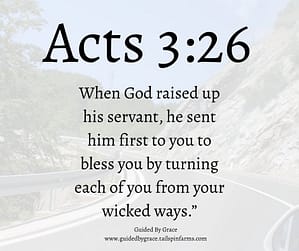
The baptism in the Holy Spirit can be given only to those who have turned toward God in true repentance (admitting and expressing true remorse for sin, turning from their own way, and submitting to Jesus’ leadership, Acts 2:38; 3:26; Matthew 3:2). The power of the baptism is maintained by the same sincere devotion to Jesus Christ and His purposes (Acts 5:32).
The baptism in the Holy Spirit is a baptism (an immersion) into the Spirit who is holy (“Spirit of holiness,” Romans 1:4). God’s holiness refers to His purity, perfection, spiritual completeness, and separation from evil. This means that if we have truly submitted to God and His Spirit is at work in us in all His fullness, our lives will become saturated with His character traits. As a result, we will be more like Christ and be an example of His holiness.
In light of these Biblical truths, those who have been baptized in the Holy Spirit will have a strong desire to please Christ in everything they do. That is because the baptism in the Spirit complements (completes, fills up) the saving and spiritually purifying work of the Holy Spirit in Christians’ lives. Those who claim to have experienced the fullness (the baptism) of the Spirit yet live in a way that is contrary to the character of God’s Holy spirit, are revealing the fact they do not
Some links may be affiliated. By purchasing an item from an affiliate link, I receive a small commission – but you are not charged more or less by clicking or purchasing through the link. Thank you for supporting me!
Some of our Post That Might Interest You, All Out of the Current Book / Chapter
Thank you so much for taking the time to read my blog post! May the words inspire and uplift all who read them. Your support and interest mean the world to me, and I’m grateful for every moment you spend here. Stay tuned for more, and feel free to share your thoughts in the comments!
Websites store cookies to enhance functionality and personalise your experience. You can manage your preferences, but blocking some cookies may impact site performance and services.
Essential cookies enable basic functions and are necessary for the proper function of the website.
Name
Description
Duration
Cookie Preferences
This cookie is used to store the user's cookie consent preferences.
30 days
Statistics cookies collect information anonymously. This information helps us understand how visitors use our website.
Google Analytics is a powerful tool that tracks and analyzes website traffic for informed marketing decisions.
Contains information related to marketing campaigns of the user. These are shared with Google AdWords / Google Ads when the Google Ads and Google Analytics accounts are linked together.
90 days
__utma
ID used to identify users and sessions
2 years after last activity
__utmt
Used to monitor number of Google Analytics server requests
10 minutes
__utmb
Used to distinguish new sessions and visits. This cookie is set when the GA.js javascript library is loaded and there is no existing __utmb cookie. The cookie is updated every time data is sent to the Google Analytics server.
30 minutes after last activity
__utmc
Used only with old Urchin versions of Google Analytics and not with GA.js. Was used to distinguish between new sessions and visits at the end of a session.
End of session (browser)
__utmz
Contains information about the traffic source or campaign that directed user to the website. The cookie is set when the GA.js javascript is loaded and updated when data is sent to the Google Anaytics server
6 months after last activity
__utmv
Contains custom information set by the web developer via the _setCustomVar method in Google Analytics. This cookie is updated every time new data is sent to the Google Analytics server.
2 years after last activity
__utmx
Used to determine whether a user is included in an A / B or Multivariate test.
18 months
_ga
ID used to identify users
2 years
_gali
Used by Google Analytics to determine which links on a page are being clicked
30 seconds
_ga_
ID used to identify users
2 years
_gid
ID used to identify users for 24 hours after last activity
24 hours
_gat
Used to monitor number of Google Analytics server requests when using Google Tag Manager